When should a fleet schedule maintenance by engine hours instead of odometer miles?
Bucket trucks, reefers, and anything that idles for hours wear out their engines without adding miles. Here is how to tell when the hour meter, not the odometer, should drive the schedule.
Why the odometer undercounts wear on some vehicles
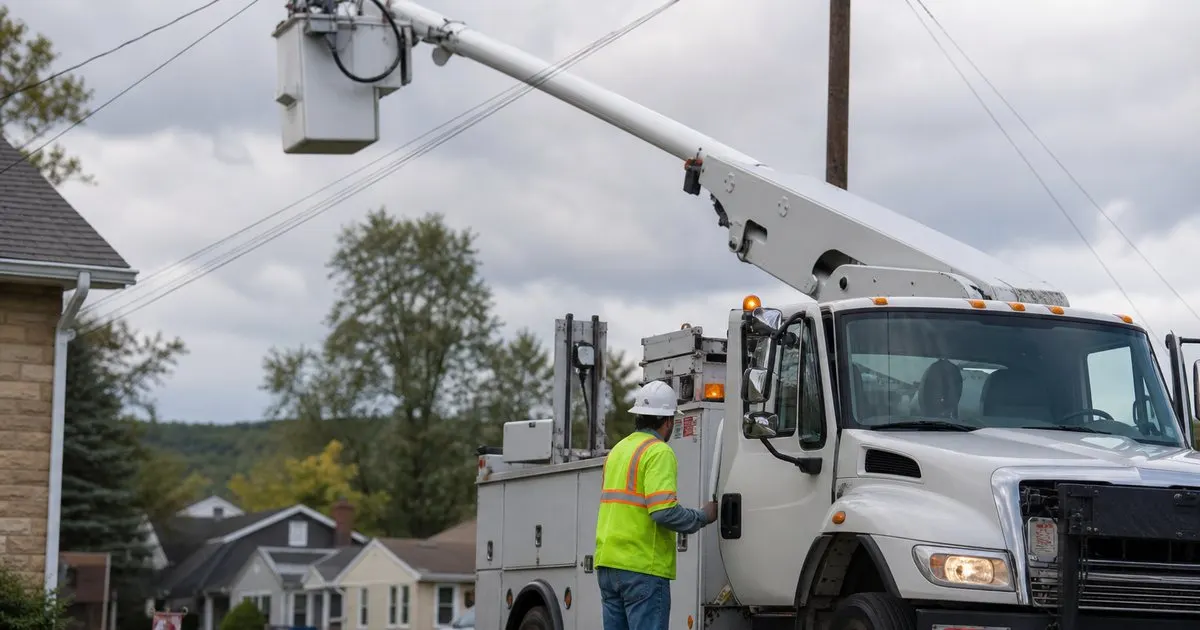
An odometer measures distance. An engine does not care about distance. It cares about combustion cycles, heat soak, and how long the oil has been circulating through a hot block. A bucket truck that sits at a jobsite running its PTO all afternoon, a service van powering an onboard generator, a tow truck idling while the operator rigs a car, and a plow truck creeping through a lot at 3 a.m. all accumulate real engine time while the odometer barely moves. The oil in those engines picks up soot, fuel dilution, and moisture just as it would on the highway, and in some cases faster, because a low-load idling engine never gets hot enough to burn off condensation.
Most manufacturer service guides already acknowledge this with a severe-duty schedule that lists miles, months, and sometimes engine hours, with the instruction to service at whichever comes first. Many fleet managers also treat an hour of idling as roughly equivalent to a meaningful stretch of driving miles when they estimate wear. The exact equivalence varies by engine and duty cycle, so use the figure in your own OEM documentation rather than a number borrowed from a forum. The point is not the ratio. The point is that a truck showing only a few thousand miles since its last oil change may have hundreds of hours of hard engine time on that same oil. Related: How do you schedule preventive maintenance by mileage across a small vehicle fleet?
Keep reading: How do you schedule preventive maintenance by mileage across a small vehicle fleet?, What is the best way to log service history for every fleet vehicle?, Why does preventive maintenance save more money than waiting for breakdowns?. See how FleetTendr helps you preventive fleet maintenance scheduling and logs.
Which vehicles belong on an hours-based trigger
A quick diagnostic is to divide miles driven by engine hours for each vehicle over the last few months. The result is an average speed while the engine was running. A highway delivery truck will land in the range you would expect from mostly road time. A utility truck, refuse vehicle, landscaping rig that tows to a site and then runs equipment, or a van that queues in dense urban stop-and-go will land far lower, and that gap is stationary engine time the odometer never saw. The lower the number, the stronger the case for tracking hours.
Beyond the math, some categories almost always qualify: anything with a power take-off, anything with an auxiliary system driven off the main engine (hydraulics, compressors, refrigeration on smaller units), vehicles assigned to on-call or standby roles where they idle to keep the cab warm or cool, and equipment-style trucks like sweepers and vacuum trucks. Conversely, a cargo van on a fixed suburban route with short stops is usually fine on miles and months alone. Do not put every vehicle on hours just because some need it; the extra data entry has to earn its keep. Related: What is the best way to log service history for every fleet vehicle?
Setting up a dual trigger without doubling the paperwork
The mechanic-friendly way to do this is a 'whichever comes first' rule per service type: an oil change is due at a mileage interval, an hour interval, or a calendar interval, and whichever threshold is crossed first fires the reminder. Newer trucks display engine hours in the dash cluster or make them available through the OBD port and telematics. Older vehicles can take an inexpensive aftermarket hour meter wired to the ignition, or you can approximate from telematics idle reports if you have them. The key discipline is recording both the odometer and the hour meter on every work order and every fuel log, so the intervals reset from an accurate starting point. Related: When should you schedule an oil change based on mileage or time?
Do not rely on drivers to remember hours from memory. Put an hours field next to the odometer field on the weekly walkaround form and on the fuel receipt log, and make it required for vehicles flagged as hours-tracked. We built FleetTendr to accept both readings on the same service record and to compute the next due date from whichever trigger is closest, but the same logic works in any system as long as both numbers are captured consistently. The failure mode is almost always missing data, not missing formulas.
Reading the results after the first few months
Once hours are in the record, look at where services are actually landing. If a vehicle keeps hitting its hour trigger at a low mileage, it is a severe-duty vehicle whether or not anyone labeled it that way, and other items on that truck deserve a second look: air and fuel filters, belts, cooling system, and for diesels the aftertreatment system, since long idling at low exhaust temperature can interfere with passive regeneration and lead to more frequent active regens or forced ones. Used oil analysis at the first couple of hour-triggered changes is a cheap way to confirm the interval is right rather than guessing. Related: Why does preventive maintenance save more money than waiting for breakdowns?
The hours data usually surfaces a second conversation about idling itself. High hours relative to miles means fuel burned while going nowhere, and in many states and cities there are anti-idling rules with time limits and fines. Auto-shutdown timers, cab heaters that do not require the main engine, and simple driver coaching can cut hours dramatically, which in turn stretches the real service interval. That is the honest payoff of tracking hours: better-timed maintenance now, and the evidence to reduce the wear in the first place.
- Odometers miss stationary engine time, so vehicles that idle, run PTOs, or power auxiliary equipment wear out oil and components faster than their mileage suggests.
- Divide miles by engine hours per vehicle; a low average speed is the signal that hours should be part of the schedule.
- Use a whichever-comes-first rule across miles, hours, and months, and record both odometer and hour meter on every service and fuel log.
- Hours data also exposes idling that fuel budgets and anti-idling laws care about, which is often the bigger win.

Julien Jimenez
Julien Jimenez is an independent software builder based in Paris. He designs, ships, and operates focused SaaS products for small businesses and independent professionals. Read the full author page.
Service Every Vehicle On Time
Preventive fleet maintenance scheduling and logs. FleetTendr is built to help you put this into practice.
Start free trialMore from the FleetTendr blog

How do you schedule preventive maintenance by mileage across a small vehicle fleet?

What is the best way to log service history for every fleet vehicle?
Why does preventive maintenance save more money than waiting for breakdowns?
Get the FleetTendr playbook
Practical guides on fleet maintenance software, straight to your inbox as we publish them. No spam, unsubscribe any time.