What should a fleet manager do when drivers stop filling out daily inspection reports?
Blank walkaround sheets are a symptom, not the disease. Here is how to find out why drivers quit, fix the part that is your fault, and rebuild the habit without turning it into a fight.
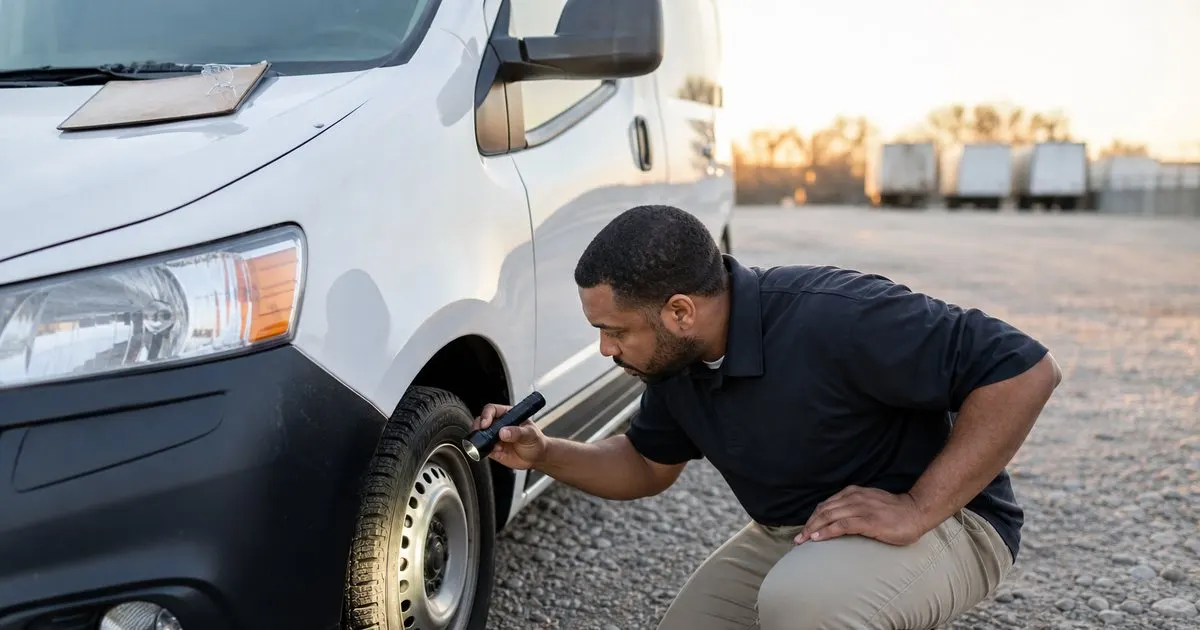
Find out why the sheets went blank
When inspection reports stop showing up, the cause is almost always one of four things: the form is too long for the time available, nobody acted on the defects drivers reported, the schedule leaves no slack before the first stop, or the paper logistics broke down (clipboards walked off, the form pad ran out, the drop box moved). Ask drivers individually, not in a group meeting, and ask what would make it worth their time. You will hear a version of one of those four almost every time, and the fix for each is different. Related: When should you schedule an oil change based on mileage or time?
The most corrosive cause is unacted defects. If a driver writes 'brake squeal' three days in a row and the van keeps rolling out with no word back, the lesson learned is that the report is theater. Once drivers believe that, no amount of reminders will bring the reports back. Before you do anything about the form, the app, or the policy, look at the last two months of defect reports and honestly account for what happened to each one. If you cannot show a response, that is where to start.
Keep reading: How do you schedule preventive maintenance by mileage across a small vehicle fleet?, What is the best way to log service history for every fleet vehicle?, Why does preventive maintenance save more money than waiting for breakdowns?. See how FleetTendr helps you preventive fleet maintenance scheduling and logs.
Cut the form down to what actually protects people
For commercial motor vehicles covered by federal motor carrier rules, drivers are required to satisfy themselves the vehicle is safe before operating it and to review the previous report, and a written driver vehicle inspection report is required when a defect that affects safety is found. For property-carrying vehicles the federal rules no longer require a written report when no defect is found, while passenger carriers are held to a stricter standard. Check the current regulations that apply to your vehicle weights and operations, and remember that many state rules and customer contracts add requirements of their own. Light-duty vans and pickups below the federal thresholds are not covered by those rules, but a two-minute walkaround is still the cheapest safety control you have. Related: Which inspections should a small fleet run before every long haul trip?
A form that takes fifteen minutes will not get done. A form that takes three to five minutes will. Keep the core items: tires and wheels, lights and signals, brakes (pedal feel and parking brake), steering play, mirrors and glass, wipers and washers, horn, fluid leaks under the vehicle, load securement and cargo doors, and any vehicle-specific equipment like a liftgate, ladder rack, or PTO. Everything else belongs on the technician's periodic inspection, not the driver's daily one. If you have several vehicle types, make a short variant for each rather than one long form that covers everything and applies to nobody.
Close the loop where drivers can see it
Every reported defect should get three things: an acknowledgment the same day, a status (scheduled, fixed, or deferred with a reason), and a message back to the driver who reported it. That last step is the one most fleets skip, and it is the one that keeps the reports coming. When a driver's note leads to a repair, say so, by name, in whatever channel your crew actually reads. It costs nothing and it converts the form from a chore into something that visibly gets trucks fixed.
Moving the report to a phone helps here for a practical reason: drivers already carry one, photos of a cut tire or a cracked mirror are worth a paragraph of description, and a timestamped submission tells you who inspected what and when without anyone chasing paper. This is one of the reasons we built a driver-facing inspection form into FleetTendr, but the principle holds for any tool. The report has to land in the same place the work order lives, so a defect becomes a scheduled repair in one step instead of being transcribed from a text message by whoever is at the desk.
Rebuild the habit without policing it
Put five minutes into the dispatch schedule for the walkaround rather than expecting drivers to find it. Walk out and do the inspection alongside a different driver each week; a supervisor who does the walkaround with people is worth more than a memo about doing it. Track submission rate per driver weekly and share it plainly, not as a leaderboard, just as a fact. Recognize the people who report consistently, especially the ones who catch real problems, and save formal escalation for someone who keeps skipping after coaching. Related: Why does preventive maintenance save more money than waiting for breakdowns?
Explain the stakes once, honestly. A missed defect can mean a roadside out-of-service order, a crash where the inspection history is the first thing an attorney requests, or simply a breakdown that strands a customer. Drivers understand that when it is framed as protecting them, not as compliance for its own sake. The combination that works is a short form, a fast visible response to every defect, a schedule that allows the time, and a manager who occasionally does it too. Remove any one of those and the sheets go blank again. Related: What is the best way to log service history for every fleet vehicle?
- Blank inspection reports usually trace back to a form that is too long, defects nobody responded to, no time in the schedule, or broken paper logistics.
- Fix the response loop first: acknowledge every defect the same day, give it a status, and tell the driver what happened.
- Keep the daily form to the safety items a driver can check in three to five minutes, with a short variant per vehicle type.
- Build the time into dispatch, do walkarounds with drivers, and track submission rates as a plain fact rather than a punishment.

Julien Jimenez
Julien Jimenez is an independent software builder based in Paris. He designs, ships, and operates focused SaaS products for small businesses and independent professionals. Read the full author page.
Service Every Vehicle On Time
Preventive fleet maintenance scheduling and logs. FleetTendr is built to help you put this into practice.
Start free trialMore from the FleetTendr blog

How do you schedule preventive maintenance by mileage across a small vehicle fleet?

What is the best way to log service history for every fleet vehicle?
Why does preventive maintenance save more money than waiting for breakdowns?
Get the FleetTendr playbook
Practical guides on fleet maintenance software, straight to your inbox as we publish them. No spam, unsubscribe any time.