What is the best way to prepare a work truck fleet for winter before the first freeze?
A winter prep pass in the fall beats a no-start call in January. Here is a practical checklist ordered by what fails first in the cold, and how to run it as a scheduled service instead of a memo.
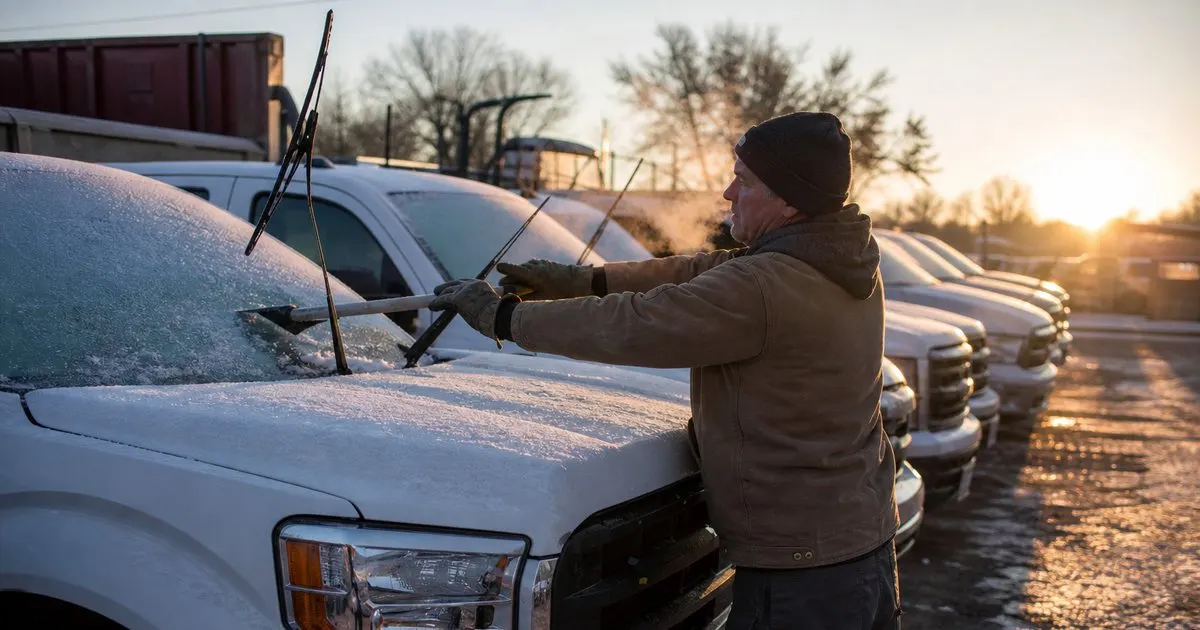
Batteries and starting systems go first
Cold does two things at once: it thickens engine oil so the starter has to work harder, and it reduces the battery's available capacity. A battery that started the truck fine in September can fail on the first single-digit morning, and it usually fails on the truck that needed to leave earliest. Load test every battery in the fall with a proper tester, not just a voltage reading, and replace the weak ones proactively rather than waiting. Clean and tighten terminals, check the age stickers, and check alternator output and belt condition while you are there, since a slipping belt in the cold makes a marginal battery worse. Related: Why does preventive maintenance save more money than waiting for breakdowns?
On diesels, test block heaters and their cords, because a heater that has not been plugged in since March is often found dead in November. Check glow plug or intake heater operation on engines that use them. If your trucks sit outside, decide now who plugs in what and where the outlets are; a written plug-in routine for the coldest nights prevents most no-starts before any parts get replaced.
Keep reading: How do you schedule preventive maintenance by mileage across a small vehicle fleet?, What is the best way to log service history for every fleet vehicle?, Why does preventive maintenance save more money than waiting for breakdowns?. See how FleetTendr helps you preventive fleet maintenance scheduling and logs.
Fluids, fuel, and the diesel-specific problems
Test coolant freeze protection with a refractometer or hydrometer on every vehicle and correct the mix to the manufacturer's specification; many use a roughly equal mix of concentrate and water, but check the manual and use the coolant type the engine calls for. Switch washer fluid to a freeze-rated formula and top it off, because a frozen reservoir on a salted highway is a genuine visibility hazard. Confirm the engine oil viscosity in use is what the manual recommends for your winter temperatures. Check brake fluid and power steering fluid levels while the hood is up.
Diesel fuel can gel when its paraffin content crystallizes in the cold, plugging filters and leaving the truck dead on the shoulder. Buy winter-blended fuel from stations in cold regions, use an anti-gel additive according to its label if your trucks fuel up in warmer areas and then travel north, replace fuel filters before winter, and drain water separators regularly, since water in the fuel freezes first. Diesel exhaust fluid freezes at roughly twelve degrees Fahrenheit. That is normal and the truck's heated tank handles it, but store spare jugs where they will not freeze and split.
Tires, brakes, and everything the driver needs to see
Tread depth matters far more on snow and slush than on dry pavement, so measure every tire and be honest about the ones that would be fine for another summer month but not for winter. Vehicles assigned to plowing, on-call, or rural routes may justify winter or all-weather tires; keep a set of chains where they are required. Tire pressure drops as temperatures fall, so recheck every vehicle after the first cold week rather than assuming the fall reading held. Inspect brake lines and calipers for corrosion, especially in states that salt roads, since that damage shows up as a leak in the worst weather.
Replace wiper blades that streak, confirm washer nozzles spray and are not clogged, test the defroster and heater on every vehicle, and check every exterior light, because the days are shorter and salt film dims lenses. Put a snow brush, scraper, flashlight, gloves, a blanket, and a small tow strap in every truck. Also inspect the exhaust for leaks; a driver idling to stay warm with a leaking exhaust is a carbon monoxide risk that does not announce itself. Related: How do you schedule preventive maintenance by mileage across a small vehicle fleet?
Run it as a scheduled service, not a memo
Create a winter prep service type with its own checklist, assign it to every vehicle with a due date in the fall, and log the results: the battery test values, the coolant freeze point, the tread depths, the block heater status. That record is what tells you next year which batteries were borderline and which vehicles were already on the edge. Add a mid-winter recheck for pressure, batteries, and wipers, and a spring service for an undercarriage wash to remove road salt and a look at brake lines and frame for corrosion. In FleetTendr this is a seasonal service with a calendar trigger, but a checklist stapled to the fall work orders does the same job. Related: What is the best way to log service history for every fleet vehicle?
Two policy items belong in the same conversation. Many states and cities enforce anti-idling limits, and drivers warming trucks for thirty minutes every morning can put a fleet on the wrong side of those rules and burn a surprising amount of fuel; a short warmup followed by gentle driving is what most manufacturers recommend for modern engines. And if any vehicles plow or spread, their hydraulics, cutting edges, spreader chains, and lighting need their own preseason inspection, because they sit unused for eight months and then get worked hardest on the coldest night. Related: Which inspections should a small fleet run before every long haul trip?
- Load test every battery, clean terminals, and verify block heaters and cords in the fall, because starting systems fail first and on the worst mornings.
- Test coolant freeze protection, switch to freeze-rated washer fluid, and for diesels use winter-blended fuel, fresh filters, drained water separators, and protected DEF.
- Measure tread on every tire, recheck pressures after the first cold week, inspect brake lines for corrosion, and equip each truck with scrapers and an emergency kit.
- Run winter prep as a logged seasonal service with a mid-winter recheck and a spring salt wash, and set an idling policy that respects local rules.

Julien Jimenez
Julien Jimenez is an independent software builder based in Paris. He designs, ships, and operates focused SaaS products for small businesses and independent professionals. Read the full author page.
Service Every Vehicle On Time
Preventive fleet maintenance scheduling and logs. FleetTendr is built to help you put this into practice.
Start free trialMore from the FleetTendr blog

How do you schedule preventive maintenance by mileage across a small vehicle fleet?

What is the best way to log service history for every fleet vehicle?
Why does preventive maintenance save more money than waiting for breakdowns?
Get the FleetTendr playbook
Practical guides on fleet maintenance software, straight to your inbox as we publish them. No spam, unsubscribe any time.